· VORTA Team · Waste Streams · 2 min read
Energy-Efficient Biomass Pretreatment for Biogas Production
A recent study demonstrates how VORTA's vortex-based hydrodynamic cavitation offers a net energy gain and enhanced biomethane potential for biomass like sugarcane bagasse.
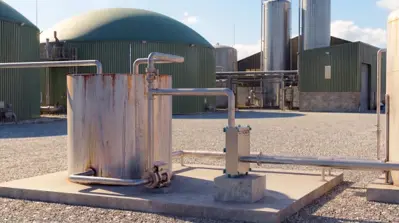
A recent study [1] delves into the promising capabilities of VORTA as an energy-efficient biomass pretreatment method. The study underscores its potential for enhancing biomethane production, while also emphasizing its commercial feasibility given its lower specific energy requirements in comparison to other methods.
Biomethane production is a rapidly emerging industry focused on sustainable energy. The quality of biomass is a crucial factor affecting the biomethane production process. Hydrodynamic Cavitation, particularly VORTA, has emerged as a novel technique for biomass pretreatment, showing promising results in enhancing the biomethane potential (BMP).
Superior Energy Efficiency
VORTA has been found to significantly enhance BMP while requiring less energy than other pretreatment methods like acoustic cavitation and conventional milling. Specifically, Hydrodynamic Cavitation requires only 140–660 kWh/ton of total solids, as opposed to 470–2400 kWh/ton for acoustic cavitation and 450–1400 kWh/ton for milling.
Advantages of VORTA
- Precision: Allows for controlled and predictable cavitation characteristics.
- Efficiency: Higher energy efficiency compared to conventional HC devices.
- Scalability: Designed for easy scale-up to handle industrial volumes.
- No Clogging: Ability to handle solid biomass without clogging, making it exceptionally versatile.
Net Positive Energy Gain
The study demonstrates that at a solid loading of >10 kg/m³, vortex-based HC pretreatment can achieve a net positive energy gain. At typical commercial Anaerobic Digestion (AD) loadings, the net energy gain can be as high as 373 kWh/ton for Sugarcane Bagasse.
The study also advocates for an integrated biorefinery approach, where the residual fibers rich in cellulose could undergo further biochemical transformations. This promises not just energy gains but also economic viability when considering capital expenditure.
Conclusion
This research makes a compelling case for the adoption of VORTA in biomass pretreatment. Its energy efficiency, industrial scalability, and commercial viability make it a key technology for the future of sustainable biogas production.
References: [1] Nagarajan, Sanjay, and Vivek V. Ranade. 2022. ‘Pretreatment of Milled and Unchopped Sugarcane Bagasse with Vortex Based Hydrodynamic Cavitation for Enhanced Biogas Production’. Bioresource Technology 361 (October): 127663. https://doi.org/10.1016/j.biortech.2022.127663.