· VORTA Team · Waste Streams · 3 min read
Enhancing Biomethane Potential of Brown Sludge through Vortex-Based Hydrodynamic Cavitation
Discover how VORTA's vortex-based hydrodynamic cavitation pretreatment significantly enhances the biomethane potential of dairy processing sludge, offering a sustainable leap forward in dairy waste management.
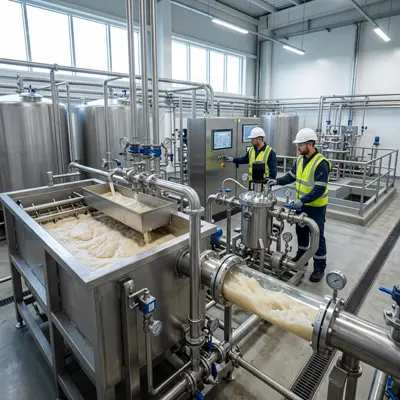
A Leap Forward in Dairy Waste Management
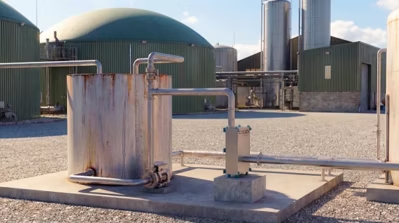
The dairy processing industry is a substantial generator of wastewater and sludge. It is estimated that dairy food processing wastewater treatment can generate up to 20 kg dairy processing sludge (DPS) per m³ of milk processed. According to estimates across EU, 2.45 million tons of DPS (wet weight) was generated in 2020, with a projected 50% increase in the next five years. Traditional waste management methods include land spreading and composting, both of which are subjected to stringent environmental regulations. One of the promising avenues for the management of this brown sludge is anaerobic digestion (AD), which not only disintegrates organic materials but also produces biomethane. However, the presence of fats, oils, and grease (FOG) in the dairy sludge presents challenges in bioconversion using microorganisms in AD.
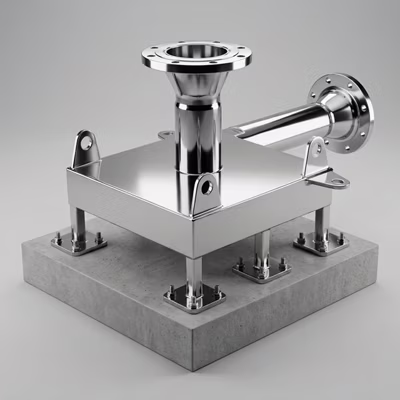
Anaerobic digestion faces the problem of inefficient breakdown of fats and other complex compounds found in brown sludge. To address this, pre-treatment methods are necessary for making the substrate more bioavailable for microbial reaction. While numerous methods exist—physical, chemical, biological, and physicochemical—each has its limitations regarding cost, efficiency, and environmental impact. For instance, chemical pre-treatment may produce inhibitors, while biological pretreatment is often slow and expensive. VORTA is a promising pre-treatment technique for enhancing the performance of AD for processing dairy waste.
Key Research Findings
A recent study [1] employed VORTA as a pre-treatment technique for brown sludge from a wastewater treatment plant in the dairy industry. Several findings were notable:
- Viscosity Reduction: Brown sludge showed non-Newtonian behavior (shear thinning), and VORTA pretreatment effectively decreased its viscosity.
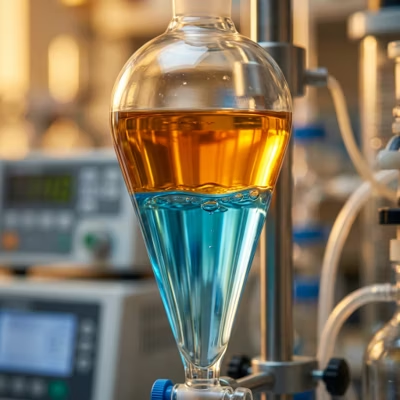
- Enhanced Bioavailability: VORTA pretreatment treatment enhanced soluble chemical oxygen demand (sCOD), thereby increasing the bioavailability of digestible substrates for Anaerobic Digestion.
- Biomethane Potential: The biomethane potential (BMP) exceeded 80% of its theoretical potential.
- Solids Removal: Volatile solids (VS) removal was more than 65% post-VORTA pretreatment.
- Energy Gain: Techno-economic analysis indicated an energy gain of 37.8 kWh/m³-sludge through Hydrodynamic Cavitation (HC) pre-treatment followed by biomethane production.
Future-Proofed Sustainability
The use of VORTA presents a promising, cost-effective, and environmentally sustainable method for the pre-treatment of brown sludge generated in the dairy industry. This pre-treatment not only enables better degradation of complex organic materials but also facilitates an increased yield of biomethane. With the dual benefits of waste management and energy production, VORTA pre-treatment could play a pivotal role in achieving future-proofed regulatory compliance and environmental sustainability in the dairy industry.
[1] Islam, Md Saiful, and Vivek V. Ranade. 2023. ‘Enhancement of Biomethane Potential of Brown Sludge by Pre-Treatment Using Vortex Based Hydrodynamic Cavitation’. Heliyon 9 (7): e18345. https://doi.org/10.1016/j.heliyon.2023.e18345.