· VORTA Team · Waste Streams · 3 min read
VORTA takes on toxic algal blooms, featured on BBC News
A VORTA hydrodynamic cavitation unit has been field-trialled on a UK lake closed by a blue-green algae bloom. It destroyed cyanobacterial cells and broke down their toxins using nothing but water. The work was featured on BBC News.
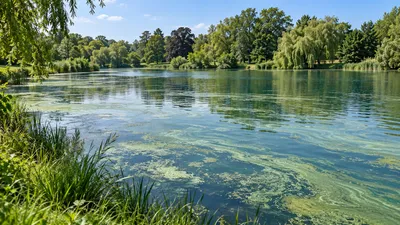
Every summer, lakes and reservoirs around the world close because of blue-green algae. In 2026, a VORTA hydrodynamic cavitation unit went to work on one of them, and the results made BBC News.
A lake closed for the summer
Warminster Lake Pleasure Grounds in Wiltshire, UK, is a popular park with boating and an active model boat club. A cyanobacterial bloom closed the lake for several months in summer 2026. Warminster Town Council’s estates manager told the BBC that the problem gets worse every year as water levels fall in hotter weather.
Dr Sanjay Nagarajan and his team at the University of Bath, with funding from the Bath Institute of Sustainability and Climate Change and on-site support from the council, set up a field trial on the lake using VORTA hydrodynamic cavitation.
What VORTA did
Lake water was pumped through a compact VORTA unit on the bank and returned to the lake. Inside the unit, rotating flow creates cavitation bubbles that collapse with intense local energy. That collapse ruptures cyanobacterial cells and generates hydroxyl radicals that attack the toxins they release.
The results:
- A large share of the cyanobacterial cells were destroyed by cavitation.
- Up to 20% of the toxins were degraded, in a first field campaign.
- No chemicals were added. The only input was water and the energy to pump it.
These numbers came from a field setup run off a generator on the lake bank, not an optimised installation. We expect a purpose-built unit, sized for the water body and run for longer, to push them well past these first results.
Why this matters
A bloom can take a lake out of use for months. Chemical algaecides can release toxins from dead cells, and waiting for cooler weather means losing access while the bloom persists. VORTA deals with the cells and the toxins on site, with nothing to dose and nothing to clean up afterwards.
It also shows how far the VORTA platform reaches. The same vortex cavitation technology we use to boost biogas yield and treat industrial wastewater now has field results on a live algal bloom.
Why not just aerate?
Aeration has a useful role in lake management. It adds oxygen and mixes the water, which can make conditions less favourable for a bloom. Its effectiveness depends on the depth and conditions of the lake, as the US EPA explains. Venturi aerators draw air into flowing water to help transfer oxygen. Their main job is aeration and mixing.
VORTA puts bubble collapse to work directly on the bloom. Its cavitation bubbles rupture cyanobacterial cells and generate reactions that break down their toxins. The advantage is active treatment of the cells and toxins already present, without adding chemicals.
For a lake that already has aeration, VORTA can add that treatment capability alongside it. Aeration supports the water conditions; VORTA targets the bloom itself.
What comes next
The research team is preparing a peer-reviewed paper on the trial. VORTA is now working on larger, mobile units that councils, water utilities and landowners can deploy where blooms keep coming back.
If you manage a lake, reservoir, wetland or farm dam that closes every summer, read about VORTA for algal blooms or talk to us about a trial.