· Rahul Dahule · Climate Action · 3 min read
When the target slips, what happens to the work?
The distance between climate urgency and industrial change is measured in trials, approvals, and installations. UNEP's latest report makes that distance harder to accept.
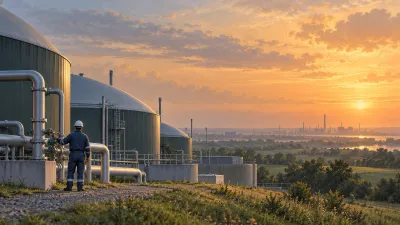
The hardest part of reading the latest climate report is recognising how much work can happen while the world still falls behind.
According to UNRIC’s account of UNEP’s 2026 Emissions Gap Report, the opportunity to limit warming to 1.5°C with no or limited overshoot has been lost. The task now is to limit the extent and duration of that overshoot, with the aim of bringing temperatures back down. Further warming still brings further harm. There is no point beyond which reducing emissions ceases to matter.
That is reason to continue. It is also a difficult thing to absorb after years of hearing that this was the decade in which the world had to act.
In industrial technology, progress has a stubbornly practical pace. A promising result has to survive a trial on the customer’s actual feed. Someone has to approve the expenditure. The equipment has to fit the plant, the operators have to trust it, and the additional output has to justify the cost of running it. Each step has a reason. Together, they can consume months while the need for emissions reductions grows more urgent.
This is the distance I think about when I read a report like this: the distance between knowing that something needs to happen and getting it into operation.
At VORTA, we are playing our small part by helping plants recover more biogas from the material they already process. There is work like this to be done across industry, wherever energy is wasted or useful material leaves a process unrecovered. We need to pursue those improvements with greater urgency, including at plants that will continue operating for years. Improving what we already have is work we can begin now, and work we need many more people to take up.
The report makes me more impatient with delay, but more careful about what we claim. Urgency makes a dependable result more valuable. It also makes it harder to justify spending a customer’s time on a promise we cannot substantiate.
Good engineering alone will not resolve this. A plant operator may accept the evidence and still lack the money to invest. An installation may make sense over its operating life and lose out to an expense that cannot wait until next quarter. Governments and financial institutions influence those decisions through the conditions they create for investment. Asking individual companies to persevere does not relieve them of that responsibility.
I would like to be able to read this report and identify one decisive change we should make. What I see instead is a greater need to follow through on the less visible parts of the work. Establish where the technology helps. Produce evidence an operator can assess. Resolve the practical questions that hold up an installation. Learn enough from each plant that the next one takes less time.
None of that is an adequate response to the report on its own. It is the part for which we can take responsibility.
The loss of a target this consequential deserves more than another statement of determination. For those of us developing industrial technology, the question is what we can get working sooner, and whether we can demonstrate that it helps. That is how I want us to judge our work at VORTA.